
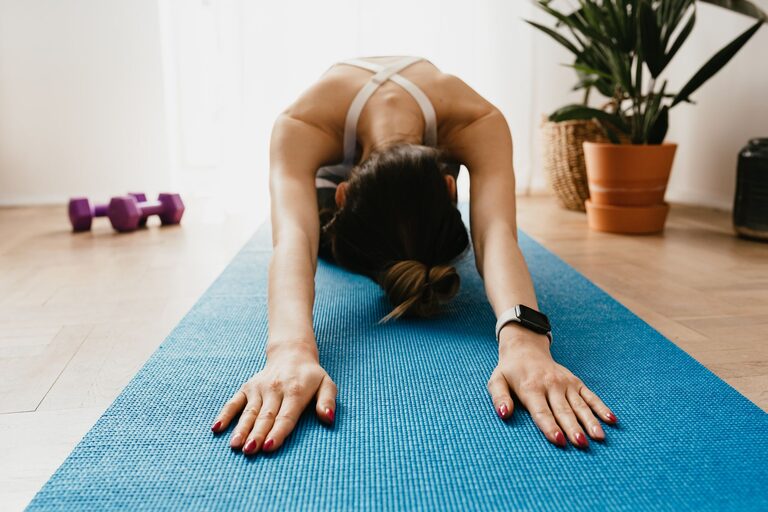
Stretching is a simple yet powerful way to improve your body’s flexibility, reduce muscle stiffness, and promote relaxation. Whether you’re new to exercising or looking for gentle ways to stay active, stretching at home is an excellent place to start. In this beginner’s guide, we’ll explore the basics of stretching, benefits, common techniques, and a step-by-step routine you can easily follow.
Why Stretching Matters
Stretching helps lengthen muscles, improve joint range of motion, and reduces the risk of injuries. Regular stretching can also relieve muscle tension caused by sitting for long periods, enhance posture, and even boost circulation. For beginners, the key is consistency and listening to your body to avoid overstretching.
Types of Stretching to Know
Before jumping into stretches, it helps to understand the main types:
1. Static Stretching
This involves holding a stretch position for 15 to 60 seconds. It’s effective for increasing flexibility and is usually done after exercising or during dedicated stretching sessions.
2. Dynamic Stretching
Dynamic stretching uses controlled, gentle movements to warm up muscles before activity. Examples include leg swings or arm circles. It prepares the body for movement without holding a position.
3. Passive Stretching
With passive stretching, you rely on an external force such as gravity, a partner, or a strap to help stretch a muscle. This can be useful for deeper stretching but should be done carefully.
Getting Started: Tips for Safe Stretching at Home
– Warm up first: Light cardio like walking or marching in place for 5 minutes helps increase blood flow before stretching.
– Breathe deeply: Inhale and exhale steadily to relax your muscles during stretches.
– Stretch gently: Avoid bouncing or pushing to the point of pain. Mild tension is okay, but sharp pain is a signal to stop.
– Hold stretches: Aim for 15 to 30 seconds per stretch, repeating 2 to 4 times.
– Be consistent: Stretch at least 3 times per week for noticeable benefits.
Basic Stretching Routine for Beginners
Here’s an easy routine covering all major muscle groups. You can do this in 10-15 minutes using just a yoga mat or soft surface.
Neck Stretch
– Sit or stand tall.
– Slowly tilt your head to one side, bringing your ear toward your shoulder.
– Hold for 20 seconds and switch sides.
Shoulder Stretch
– Bring your right arm across your chest.
– Use your left hand to gently press on your right arm.
– Hold for 20 seconds and change arms.
Chest Stretch
– Stand with your feet shoulder-width apart.
– Clasp your hands behind your back and straighten arms.
– Lift your hands slightly and open your chest.
– Hold for 20-30 seconds.
Triceps Stretch
– Raise your right arm overhead and bend the elbow to touch your upper back.
– Use your left hand to gently push on the bent elbow.
– Hold for 20 seconds and switch sides.
Cat-Cow Stretch (Spine Mobility)
– Start on all fours with hands under shoulders and knees under hips.
– Arch your back toward the ceiling (cat), then lower your belly toward the floor while lifting your head and tailbone (cow).
– Repeat slowly 5-8 times.
Seated Hamstring Stretch
– Sit on the floor with legs extended straight.
– Keep your back straight and slowly reach towards your toes.
– Hold for 20-30 seconds.
Quadriceps Stretch
– Stand and hold onto a chair or wall for balance.
– Bend your right knee and grab your ankle behind you.
– Gently pull your foot toward your buttock.
– Hold for 20 seconds and switch legs.
Calf Stretch
– Stand facing a wall with one foot forward and one foot back.
– Keep your back leg straight and press your heel into the ground.
– Hold for 20 seconds and switch legs.
Incorporating Stretching into Your Day
Stretching can be done at any time of day. Try these ideas to make it a habit:
– Stretch after waking up to loosen stiff muscles.
– Take short stretch breaks during long work or study sessions.
– Use stretching as a cool-down after workouts.
– Include stretches in your evening routine to relax before bed.
When to Avoid Stretching
Stretching is generally safe, but avoid stretching if you:
– Have an injury to muscles, tendons, or joints.
– Feel sharp pain during a stretch.
– Are unsure about a stretch related to a pre-existing condition without consulting a professional.
Final Thoughts
Starting a stretching routine at home is straightforward and highly rewarding. With just 10-15 minutes a few times a week, you can improve your flexibility, comfort, and overall well-being. Remember to be gentle, stay consistent, and enjoy the process of caring for your body.
Feel free to bookmark this guide and revisit the routine regularly. Your body will thank you!